China Top 10 Urine Container Manufacturers for Global Buyers

Choosing a urine container manufacturer is not just a price comparison. Buyers need to examine material consistency, leak resistance, cap fit, labeling options, and production capacity. A container may look sound in a product photo, yet a loose lid can cause trouble during routine handling. Small details matter.

For this editorial overview, fictional quality specialist Dr. Lin Wei offers a practical reminder: “A dependable urine container is judged by its seal, clarity, and consistency—not by appearance alone.” This is an illustrative quote, not a statement from a real industry authority. The point is simple. Ask for product specifications, sample units, and clear answers about inspection procedures before making a sourcing decision.

The manufacturers featured in this guide are intended to help global buyers compare suppliers across relevant capabilities, rather than assume that every factory serves every need. Check available sizes, packaging formats, customization, and communication practices. Confirm details directly with each supplier. Even a polished catalog leaves questions unanswered. This overview also has limits: supplier information can change, and product claims should be verified independently. Use the comparison as a starting point, not a substitute for technical review. A careful shortlist takes time. That is time well spent.
China Top 10 Urine Container Manufacturers for Global Buyers

China’s Role in the Global Urine Container Manufacturing Market

China Top 10 Urine Container Manufacturers for Global Buyers

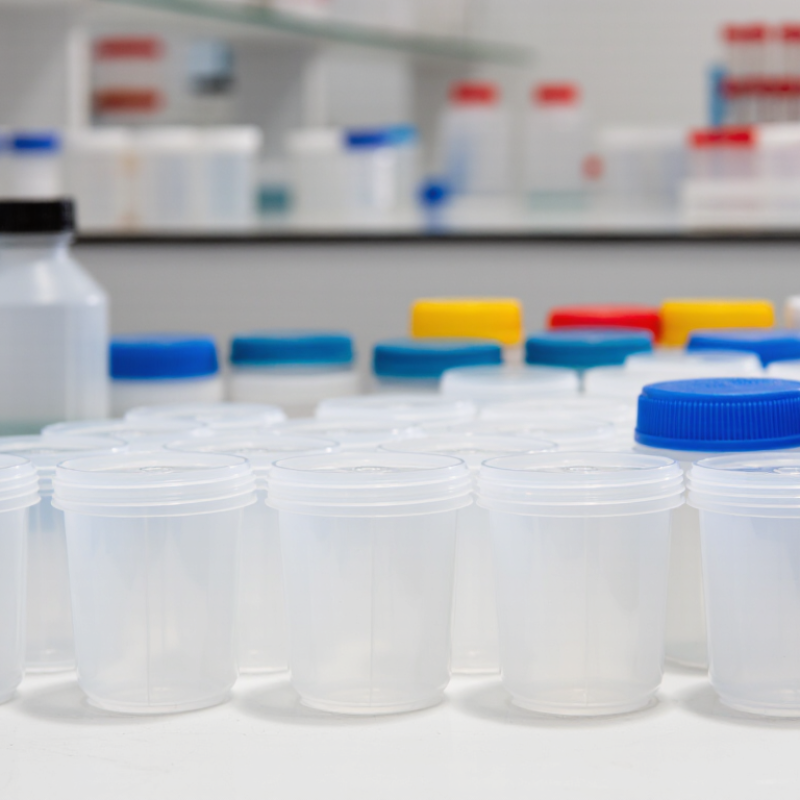
China has become a major production base for urine containers used in hospitals, laboratories, and home-care settings. Its manufacturers offer molded plastic options, sterile packaging, custom labeling, and scalable production. Experienced suppliers usually control resin selection, wall thickness, lid fit, and leak testing. These details matter when containers travel through long supply chains. Many factories also support documentation, batch traceability, and inspections before shipment. However, production capacity alone does not prove consistent quality.

Global buyers should assess material specifications, closure performance, cleanliness controls, and packaging protection. Ask for test reports that match the intended market and application. Review sampling procedures, complaint handling, and production records. A factory may provide an attractive sample, yet perform differently during large-volume manufacturing. This is where practical audits become valuable. China’s supply network is broad, but supplier comparison still requires patience and technical judgment.

Tips: Confirm whether the container is sterile or non-sterile before ordering. Check graduations under real lighting conditions. Test the lid after transport simulation. Request several production samples, not only one. Also, verify applicable import and medical-device requirements with qualified local professionals. Some buyers focus heavily on unit price and overlook storage conditions. That choice can create avoidable problems later.
China’s Role in the Global Urine Container Manufacturing Market

Common nominal capacities supplied for global urine specimen collection. These formats are widely used in hospitals, laboratories, diagnostic centers, and home-collection kits; the chart is not a company ranking or market-share estimate.

Reference basis: standard capacities commonly specified in international urine specimen-container catalogs and procurement documents. China is a major source of OEM and contract-manufactured medical consumables across these formats.

Key Criteria for Evaluating Chinese Urine Container Manufacturers

When comparing Chinese urine container manufacturers, evaluate more than unit price. A reliable supplier should explain resin selection, molding controls, and inspection steps clearly. For routine sampling, polypropylene may offer useful chemical resistance and rigidity. Low-density polyethylene can feel softer and reduce cracking during transport. Ask for material declarations, lot traceability, and sample records. Keep samples on your desk. Check lid fit, thread smoothness, graduations, odor, and burrs under normal light. Small defects become costly when thousands of containers reach laboratories.

Production capability deserves direct evidence. Request recent factory-audit reports, equipment lists, and process-control documents. Confirm whether assembly, labeling, sterilization, and packing are handled internally or outsourced. Outsourcing is not automatically weak, but unclear responsibility creates delays. Review capacity by shift, lead time during peak months, and backup tooling plans. A serious manufacturer should discuss deviations honestly, not promise perfect output. This matters.

Quality systems should match the intended market and application. Check applicable certifications through issuing bodies, rather than trusting scanned logos alone. Discuss leak testing, drop testing, closure torque, and cleanliness limits before signing specifications. Packaging also needs attention: carton strength, moisture protection, pallet stability, and readable lot codes affect real deliveries. Communication is another practical test. Send a detailed inquiry with five technical questions and measure the response. Vague answers may signal weak documentation. I would still arrange a pilot order, because factory visits and documents cannot reveal every production variation. Review the first shipment with retained samples and a written corrective-action process.

Top 10 China Urine Container Manufacturers for Global Buyers

China’s top 10 urine container manufacturers for global buyers should be assessed by performance, not catalog size. A useful shortlist examines material quality, molding accuracy, closure design, and production consistency. Most reliable factories offer polypropylene or polystyrene containers with clear graduation lines, smooth rims, and secure screw caps. Some also provide sterile, non-sterile, or preservative-ready options for different laboratory workflows.

During supplier evaluation, buyers should request recent batch records, leak-test results, packaging photographs, and sample units. The best manufacturers explain their quality controls clearly. They can usually discuss mold maintenance, cleanliness monitoring, labeling accuracy, and carton protection during export. ISO-based quality systems may support confidence, but certificates should be checked with the issuing organization. Do not rely on a scanned document alone.

Small details matter. A cap that threads unevenly can cause leakage during transport. Faint markings can also affect sample handling. Request samples first. Compare wall thickness, cap torque, transparency, odor, and barcode readability. Ten suppliers may look similar online, yet their factory discipline can differ sharply. Price is important, but it can hide material changes or weaker packaging. No shortlist is perfect. Buyers should review production capacity, communication speed, customization limits, and after-sales response before placing a large order. A practical decision combines evidence, repeated sampling, and careful risk review.

Product Types, Materials, and Quality Standards

For global buyers reviewing China’s top 10 urine container manufacturers, product type should match the testing workflow. Standard sterile cups suit routine urinalysis, while screw-cap containers reduce leakage during transport. Some laboratories need preservative tubes or vacuum collection systems. A practical audit checks lid torque, graduation accuracy, barcode adhesion, and the clarity of sample visibility. Small failures become expensive quickly.

Material selection also affects reliability. Medical-grade polypropylene offers chemical resistance, low weight, and better impact performance than many general-purpose plastics. Polystyrene can provide clarity, but it is more brittle under cold transport. The OECD Global Plastics Outlook reported 353 million tonnes of plastic waste in 2019, almost double the 2000 level. Buyers should therefore request resin identification, recycled-content declarations where appropriate, and disposal guidance. Sustainability cannot replace specimen safety.

Quality evidence should be more than a polished certificate. ISO 15189:2022 supports competence requirements for medical laboratories, while ISO 10993 testing helps assess biological safety for relevant patient-contact materials. The WHO Laboratory Biosafety Manual recommends leak-resistant, correctly labeled, and transport-secure primary containers. Batch records should include sterility results, dimensional checks, seal testing, and lot traceability. Yet supplier documents are not perfect. Independent sampling remains wise. A container may pass visual inspection and still fail after vibration, freezing, or repeated cap handling.

China Top 10 Urine Container Manufacturers for Global Buyers - Product Types, Materials, and Quality Standards

This is an anonymous product-and-capability comparison, not a verified ranking of individual companies. Specifications vary by product and supplier; buyers should confirm current technical files, test reports, and regulatory status directly with each manufacturer.

No. Manufacturer Profile Common Product Type Typical Capacity Common Materials Typical Design Features Quality and Regulatory Checks
1 Routine specimen-cup producer Urinalysis and urine specimen cup 30–120 mL Polypropylene (PP) or polystyrene (PS) Wide opening, graduated volume markings, screw cap; sterile and non-sterile versions may be offered. Check dimensional consistency, readable graduations, cap fit, leakage performance, and applicable specimen-container requirements such as EN ISO 6710.
2 Sterile collection-container producer Sterile, single-use urine collection cup 30–120 mL PP or PS; material choice depends on design and sterilization method Individually packaged; sterility claim should be supported by a validated sterilization process and packaging system. Request sterilization validation, packaging integrity evidence, lot traceability, and a defined sterility assurance approach.
3 Leak-resistant cup producer Transport-ready urine specimen container 60–120 mL Usually PP; cap liner or sealing component may use another compatible material Threaded cap and sealing surface designed to reduce leakage during handling and transport. Review leak testing under stated test conditions, closure compatibility, packaging instructions, and transport-use claims.
4 Screw-cap container producer General-purpose urine specimen container 30–100 mL PP, PS, or HDPE, depending on the container design Single-piece or separate-cap construction; available with or without a label area. Assess material specifications, cap engagement, molded-part inspection, and batch-to-batch consistency.
5 Transfer-compatible cup producer Specimen cup with transfer port or sampling access 60–120 mL PP is commonly used for molded cup bodies; seals may use compatible elastomers or polymers Designed to allow sample transfer using a compatible device; port configuration is product-specific. Confirm port compatibility, seal integrity, usability instructions, and performance testing for the intended transfer device.
6 Urine transport-tube producer Urine specimen transport tube Commonly 5–10 mL working fill, depending on tube design Polyethylene terephthalate (PET), PP, or other specified tube material May be supplied with a screw cap, transfer interface, or preservative; tube dimensions and filling method vary. For preservative tubes, verify additive identity and fill ratio, stability data, labeling, and compatibility with the intended test method.
7 Preservative-tube producer Urine collection or transport tube containing a preservative Product-specific; commonly a few millilitres per tube PET or PP tube with a compatible closure and specified additive May use boric-acid-based preservative formulations; suitability depends on the assay and validated instructions for use. Check preservative concentration, fill-volume requirements, chemical compatibility, shelf-life evidence, and assay-specific performance data.
8 Large-volume collection-container producer 24-hour urine collection bottle Typically 2–3 L HDPE or PP Large opening, handle, secure closure, and volume graduations; some designs are opaque or amber-tinted for light-sensitive collections. Check usable capacity, graduation accuracy, closure security, material compatibility, and clear collection and storage instructions.
9 Pediatric urine-collection product producer Urine collection bag with adhesive attachment Product-specific; commonly tens to a few hundred millilitres Flexible polyethylene film with an adhesive skin-contact component Designed for short-term collection; available in different shapes and sizes for intended patient groups. Review adhesive and skin-contact material documentation, pouch seal integrity, instructions for use, and applicable biocompatibility assessment.
10 Custom-format container producer Special-purpose urine specimen cup or collection vessel Buyer- and application-specific Typically PP, HDPE, PS, or PET, selected for the intended use May include custom capacity, color, label area, cap design, or packaging format; custom features require product-specific validation. Confirm controlled specifications, change control, traceability, risk management, and applicable market authorization before purchase.

Standards note: EN ISO 6710 addresses single-use containers for the collection of human specimens. ISO 13485 is a quality-management-system standard for medical-device organizations, not a product-performance certificate. Regulatory requirements depend on the intended use and destination market; verify applicability and current compliance evidence with the supplier.

Export Services, Pricing, and Supplier Selection Factors

China’s top 10 urine container manufacturers should be compared by export reliability, not catalog size alone. The 2023 WHO/UNICEF Joint Monitoring Programme reported that 3.5 billion people lacked safely managed sanitation in 2022. This highlights demand for hygienic, leak-resistant collection products. Export-ready suppliers should provide multilingual documents, stable packaging, batch traceability, and practical support for customs inspections.

Pricing depends on resin type, capacity, lid design, sterility requirements, and order volume. A low quotation may exclude molds, testing, inner cartons, or sea freight. Request a complete FOB or CIF cost sheet. Also check production lead time, sample approval, defect handling, and replacement terms. The WHO Global Report on Infection Prevention and Control notes that effective infection-control programs can reduce healthcare-associated infections substantially. Therefore, material safety, secure sealing, and clean production deserve more attention than a small unit-price difference.

Tips: Ask for three samples from different batches. Test the lid after transport simulation. Review ISO 13485-based quality procedures, even when certification is not legally required. Confirm whether export documents match the destination market. No ranking is perfect. Supplier selection still needs human judgment, factory video checks, and an independent pre-shipment inspection. Some buyers focus too heavily on price, then discover that damaged cartons create higher costs. That mistake is common, and avoidable.