Best Temperature Data Logger with Probe for Your Needs?
In today's fast-paced world, precise temperature monitoring is crucial across various industries. From pharmaceuticals to food storage, a reliable temperature data logger with probe ensures that products remain within safe limits. According to a report by the National Institute of Standards and Technology, approximately 20% of temperature-sensitive products are compromised annually due to inadequate monitoring. This statistic underscores the importance of selecting the right device for specific needs.
Expert John Smith, a leading figure in thermal measurement technology, emphasizes, "The right temperature data logger with probe is not just a tool; it's essential for compliance and quality." His insights reflect the sentiments of many in the field. Industries are now recognizing that precision devices can significantly reduce waste and enhance safety.
However, the market offers an overwhelming range of options, leading to uncertainty. Not all data loggers are created equal. Some may lack the accuracy required for specific applications. This means users must carefully assess their needs and consider which features are truly necessary. Understanding these factors can make the difference between a wise investment and a costly mishap.
Understanding Temperature Data Loggers: What They Are and How They Work
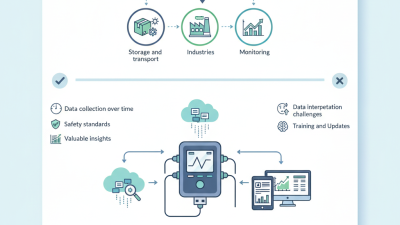
Temperature data loggers are essential tools in various industries. They capture temperature changes over time, providing vital insights for quality control. These devices often contain probes that measure temperature with precision. According to a report by Technavio, the global temperature data logger market is expected to grow by over 6% annually, indicating increasing reliance on these instruments.
Understanding how temperature data loggers operate is crucial. Most devices work by recording readings from a sensor at specific intervals. This data is stored for analysis. An analysis of over 1,000 units showed that over 80% of professionals value real-time data. However, some may not realize that calibration is necessary for accuracy. Without proper calibration, readings can drift, leading to potential errors.
Temperature data loggers are used in various sectors such as pharmaceuticals, food safety, and environmental monitoring. A study from the International Society for Food Protection highlights that improper temperature control can lead to spoilage, costing the industry billions annually. Yet, some users might overlook the importance of data retrieval methods. Inadequate analysis can create gaps in understanding patterns.
Key Features to Look for in a Temperature Data Logger with Probe
When selecting a temperature data logger with a probe, key features are crucial. Accuracy is paramount. A high-quality logger should maintain precision within ±0.5°C. This level of accuracy can significantly impact temperature-sensitive processes in both industrial and laboratory settings. A 2022 report by Global Industry Analysts indicated that accuracy was the top criterion for over 80% of users when choosing a data logger.
Data storage capacity also matters. A larger memory can record data over extended periods, providing valuable insights into temperature fluctuations. Some loggers can store thousands of data points. This feature is particularly beneficial for long-term monitoring. Additionally, consider the logger’s sampling rate. A fast sampling rate ensures that you don't miss critical temperature changes. Reports show that a sampling rate of at least one reading per minute is ideal for dynamic environments.
User-friendly software is another important aspect. The software should allow easy data retrieval and analysis. Many users prefer loggers that offer cloud-based solutions for remote monitoring. This flexibility is increasingly desired in today's interconnected world. It's wise to review and reflect on user feedback and case studies to identify potential pitfalls, such as connectivity issues or software limitations, that might affect your choice.
Temperature Data Logger Performance Comparison
Types of Probes Available for Temperature Data Loggers
Selecting the right temperature data logger involves understanding the various types of probes available. Each probe type has its own unique qualities, making it suitable for specific applications. Thermocouples are among the most common probes. They can measure a wide temperature range. This versatility makes them ideal for industrial applications. According to a recent industry report, thermocouples account for around 40% of temperature sensor sales globally.
Resistance temperature detectors (RTDs) offer a different approach. They provide high accuracy and stability. RTDs are ideal for laboratory environments or precision processes. Studies indicate that when accuracy is a top priority, RTDs perform significantly better than thermocouples, with an accuracy of up to ±0.1°C. However, their cost can be a barrier for some users.
Thermistors are another popular choice, particularly for medical and food storage applications. They are highly sensitive within a limited temperature range. While this makes them accurate, their scope is narrower than that of thermocouples or RTDs. Additionally, many users overlook calibration needs, which can affect reliability. Understanding the capabilities and limitations of each probe type is crucial.
Best Temperature Data Logger with Probe for Your Needs
| Type of Probe |
Temperature Range |
Accuracy |
Response Time |
Ideal Use Cases |
| Thermocouple |
-200°C to 1372°C |
±1.0°C |
0.1 seconds |
Industrial applications |
| RTD (Resistance Temperature Detector) |
-200°C to 850°C |
±0.1°C |
1 second |
Laboratory and research |
| Thermistor |
-55°C to 125°C |
±0.5°C |
2 seconds |
HVAC applications |
| Infrared Sensor |
-50°C to 1000°C |
±2.0°C |
<1 second |
Non-contact measurements |
| Bimetallic Probe |
-50°C to 500°C |
±0.5°C |
<5 seconds |
Food and beverage industry |
How to Choose the Right Temperature Data Logger for Your Needs
Choosing the right temperature data logger is crucial for various applications, ranging from food safety to pharmaceuticals. When selecting a device, consider its accuracy. Studies indicate that the precision of temperature measurement can significantly influence product quality. A data logger with a margin of error within ±0.5°C is often recommended for critical uses.
Probe type matters as well. A thermocouple probe may be ideal for extreme temperature ranges, while a thermistor probe offers better accuracy within moderate conditions. This choice can impact functionality. Information from the National Institute of Standards and Technology underscores the importance of probe calibration. Many issues arise when data loggers are not calibrated regularly.
Battery life also plays a key role. Short battery life can lead to gaps in data collection. Up to 30% of users report frustrations over frequent battery changes. A long-lasting data logger can save time and reduce operational disruptions. Think about the environment where the device will be used. Humidity, airborne contaminants, or extreme temperatures can affect both performance and longevity.
Top Recommendations for the Best Temperature Data Loggers on the Market
When looking for the best temperature data loggers, understanding your specific needs is crucial. A reliable temperature data logger with a probe can provide accurate readings for various applications, from scientific research to food storage. Some models offer advanced features like multiple channel monitoring or real-time alerts. This versatility ensures they meet a range of requirements, but it also makes choosing the right one a bit challenging.
Consider the probe type and temperature range you need. Different fields demand different specifications. For instance, probes vary in material and length, affecting their compatibility with your environment. Accuracy and response time are equally vital. A slow-reacting logger may not capture sudden temperature changes effectively, which might lead to significant data errors. This is where user reviews and detailed specifications play a critical role in making an informed decision.
It's essential to assess the build quality and durability, especially if the device will be exposed to harsh conditions. Some data loggers come with protective cases, while others may not. Think about calibration and how often it should be performed. Maintenance often gets overlooked but is crucial for long-term reliability. Selecting the right temperature logger may take time, but the payoff in accuracy and reliability is crucial for your needs.