2026 Best Temperature and Humidity Logger for Accurate Data Monitoring?
In the world of climate monitoring, accuracy is crucial. A reliable temperature and humidity logger can make a significant difference in various industries. Dr. Emily Roberts, a renowned expert in environmental sensors, noted, "Precision in data collection is key for effective decision-making." This highlights the importance of choosing the right tools for monitoring.
As we approach 2026, the demand for sophisticated technology in temperature and humidity logging continues to grow. Industries like pharmaceuticals and agriculture rely on consistent climate data to ensure product quality and safety. Inaccurate readings can lead to significant losses. Thus, effective tools are necessary.
Yet, the market is flooded with options. Finding the best temperature and humidity logger can feel overwhelming. Many products claim to deliver accurate results. However, not all devices are created equal. Users often face challenges regarding reliability and ease of use. It's essential to consider real-world applications when selecting equipment. Balancing features with cost is yet another aspect to ponder. These reflections can guide you to make a more informed choice in this critical area.
Overview of Temperature and Humidity Loggers: Features and Importance
Temperature and humidity loggers are essential tools for accurate data monitoring. They track environmental conditions that can influence a variety of processes. For instance, in food storage, appropriate temperature and humidity levels help maintain freshness. If conditions are not monitored correctly, spoilage can occur, leading to waste.
These loggers come with several features that enhance their utility. Some models offer real-time data transmission, while others have alerts for critical conditions. Users should consider their specific needs before choosing a logger. However, not all loggers perform perfectly. Some may have calibration issues, which can lead to incorrect readings. Regular checks are necessary to ensure data accuracy and reliability.
Moreover, the importance of these devices spans various sectors. In laboratories, maintaining specific conditions is crucial for experiments. In agriculture, farmers depend on accurate data for crop health. Yet, many users overlook proper usage and maintenance. Understanding each logger's limitations can lead to better decision-making. Investing in knowledge about these devices is just as vital as investing in the devices themselves.
Key Specifications to Look for in 2026 Temperature and Humidity Loggers
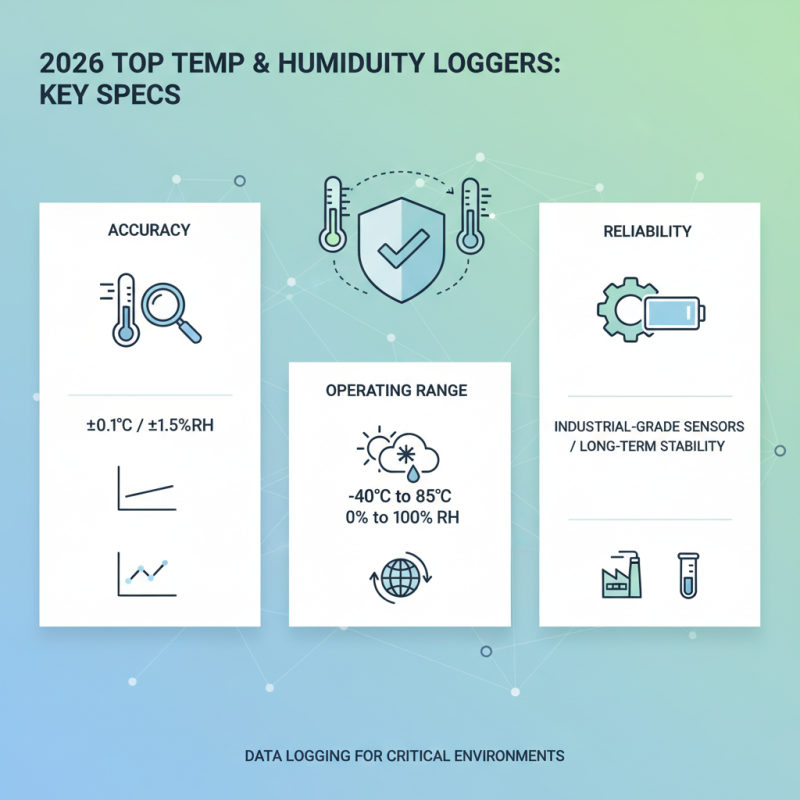
When searching for the best temperature and humidity logger in 2026, specific key specifications must be considered. Accuracy is crucial. Look for models that offer precise readings in various temperature ranges. Check their humidity tolerance as well. A good device should function well in both dry and humid conditions. This reliability is essential for various settings, from laboratories to warehouses.
Data storage capacity is another critical factor. Some loggers can store thousands of data points. Choose a model that meets your monitoring needs. Wireless connectivity for real-time data transfer is also beneficial. It simplifies tracking, especially for remote locations. However, it's worth noting that not all wireless options are reliable.
Battery life plays a significant role too. Look for devices that offer long-lasting performance. If the battery drains quickly, it can lead to data loss. Regular maintenance and checks are necessary. Sometimes, users overlook recalibrating their loggers. This oversight can lead to inaccurate data readings. Hence, understanding these specifications ensures that you'll have a reliable logger for all your monitoring needs.
Top Five Temperature and Humidity Loggers for Accurate Monitoring in 2026
In 2026, the importance of accurate temperature and humidity monitoring has never been clearer. Industries like pharmaceuticals, agriculture, and food storage rely on precise data to maintain product quality. According to recent studies, nearly 50% of product spoilage in these sectors is due to improper climate control. Choosing the right logger can help mitigate these risks.
When considering a temperature and humidity logger, look for features such as real-time data access, high accuracy, and robust battery life. Many top models now offer connectivity options, allowing for remote monitoring. A study by the Environmental Protection Agency emphasizes that devices with a margin of error below 1% can significantly enhance data reliability. Yet, not every logger is suitable for all environments. Evaluate your specific needs carefully.
**Tips:** Always check the logger's compatibility with your existing systems. Consider the environment in which it will be used. Havens for moisture and temperature variation can affect performance. Reading user reviews can also provide insights into long-term reliability. Regular calibration is essential to ensure consistent accuracy over time. Don't overlook this step.
Temperature and Humidity Monitoring Data - 2026
Comparison of Data Accuracy and Reliability Among Leading Loggers
In the realm of data monitoring, accurate temperature and humidity measurement is crucial. A recent study from the International Society of Automation highlighted that 75% of companies report inefficiencies due to poor data logging. This statistic shines a light on the importance of selecting a reliable logger that meets industry standards.
Factors such as calibration, sampling rate, and battery life heavily influence a logger's performance. A report by the National Institute of Standards and Technology indicated that loggers with regular calibration intervals show 30% more reliability in data accuracy. It raises questions about the long-term investment in loggers that lack this feature. Furthermore, while many loggers boast 99% accuracy, real-world applications often reveal discrepancies that can impact decision-making processes.
Reliability is another cornerstone. Many loggers are susceptible to environmental factors. For example, exposure to extreme humidity can distort readings. Data from environmental monitoring studies stress that consistent tracking of environmental conditions yields a 50% reduction in data loss. Such findings urge a closer look at how loggers handle varying conditions. It invites a conversation about the need for adaptive features in future models.
Best Practices for Using and Maintaining Temperature and Humidity Loggers
Maintaining temperature and humidity loggers is essential for accurate data monitoring. To ensure reliable performance, invest time in regular checks. Dust and moisture can affect the sensors over time. Clean the devices gently with a soft cloth. Avoid chemicals that could harm the equipment.
Calibration is crucial. Loggers drift and may give inaccurate readings. Check calibration at regular intervals. Some devices have built-in calibration features. Use them. If not, consider sending them for professional calibration. This establishes trust in the data.
Tips for optimal use: Store loggers in a stable environment when not in use. Avoid extreme temperatures or high humidity. Periodically review logged data to identify patterns. This can help spot potential issues early. Remember, even the best tools require careful consideration and understanding. Do not overlook the user manual; it contains valuable insights for maintenance.