The Best 50 ml Centrifuge Tubes for Your Laboratory Needs?
In laboratories worldwide, 50 ml centrifuge tubes play a critical role in various research and clinical applications. According to industry reports, the global demand for these tubes is projected to grow by 7% annually. This growth reflects the increasing focus on precision and reliability in scientific experiments. The versatility of 50 ml centrifuge tubes makes them indispensable in areas such as molecular biology, biochemistry, and virology.
Despite their importance, choosing the right 50 ml centrifuge tubes can be challenging. Many options exist, each with varying levels of quality and suitability for specific applications. Some researchers report frustration with leaks or inadequate lids in lower-quality tubes. Additionally, not all tubes are compatible with high-speed centrifugation, which can lead to sample loss.
Laboratory professionals must consider multiple factors. The material, whether polypropylene or polystyrene, can impact chemical resistance and clarity. Furthermore, a lack of standardized measurements can complicate the selection process. Thus, ensuring the right fit for experimental needs is vital. Addressing these challenges can enhance laboratory efficiency and data accuracy.
Understanding the Importance of 50 ml Centrifuge Tubes in Laboratories
In laboratories, 50 ml centrifuge tubes play a crucial role in sample processing. These tubes are a common choice for handling liquids, including biological samples, due to their size and durability. According to industry reports, over 75% of laboratory experiments rely on centrifuge tubes for accurate results. Their design helps prevent contamination and ensure sample integrity during spins.
When selecting a centrifuge tube, consider the material. Polypropylene is widely used for its chemical resistance and clarity. This is key for visual inspections. However, not all tubes are the same; some may degrade under high temperatures or specific solvents. Testing conditions must match the chosen tube.
Tip: Always validate the tube's compatibility with your samples. Keep a record of which tubes work best with specific reagents.
Another factor is the tube’s sealing mechanism. Secure sealing prevents leaks and preserves sample concentration. But remember, an ill-fitting cap can lead to cross-contamination. While most users focus primarily on volume, the thickness of the tube wall can also affect stability during high-speed spins.
Tip: Experiment with various brands to identify tubes that balance quality and cost-efficiency.
In summary, while 50 ml centrifuge tubes are essential, careful selection is vital for laboratory success. Recognizing their importance can impact the outcome of your research significantly.
Key Features to Consider When Selecting 50 ml Centrifuge Tubes
When selecting 50 ml centrifuge tubes, several key features can significantly affect laboratory efficiency. One major feature is the material composition of the tubes. Most commonly, these tubes are made from polypropylene, which offers excellent chemical resistance. This ensures that the contents remain uncontaminated during centrifugation. According to a study published in the Journal of Laboratory Technology, tubes made from high-quality polypropylene maintain structural integrity under high centrifugal forces.
Another critical factor is the tube’s clarity. Transparent tubes allow for easy inspection of samples. This transparency aids in visualization, which helps avoid unnecessary errors in sample handling. A report from the International Society of Laboratory Professionals highlighted that nearly 30% of sample mishandling incidents arise from poor visibility. Proper labeling is equally important. A clearly labeled tube helps reduce the risk of cross-contamination, a common issue in laboratory environments.
Furthermore, the closure system used in these tubes can make a difference. Screw caps can provide a tight seal, ensuring that volatile substances remain contained. However, not all tubes perform equally under varying temperatures. One study noted that tubes could deform under extreme conditions, thus compromising sample integrity. This highlights the importance of careful evaluation before selection. Choosing the right tube requires attention to detail and a thorough understanding of laboratory needs.
Top Brands and Their Offerings for 50 ml Centrifuge Tubes
When choosing 50 ml centrifuge tubes, it’s crucial to consider various manufacturers and their offerings. Many brands offer a range of materials, such as polypropylene and polystyrene. Polypropylene tubes are favored for their chemical resistance and strength. They typically withstand temperatures from -80 to 121 degrees Celsius.
Research indicates that the precision in centrifuge tube selection can significantly impact experimental outcomes. A 2021 report noted that improper tube selection might lead to sample contamination or loss. Regular complaints in labs highlight issues like lid integrity during high-speed spins. Some tubes tend to crack, risking sample quality. It’s wise to check for user reviews or data on mechanical properties before choosing.
Additionally, features such as conical bottom designs are offered by some brands, allowing better sedimentation. The clarity of the tube is also important for visual inspection of samples. Some scientists prefer tubes marked with graduations for accurate measurement. However, discrepancies in calibration among different brands can complicate experiments. Researchers should be aware of these differences to mitigate errors in data collection. Always stay informed about the latest developments in centrifuge technology.
Comparative Analysis of Material Types for 50 ml Centrifuge Tubes
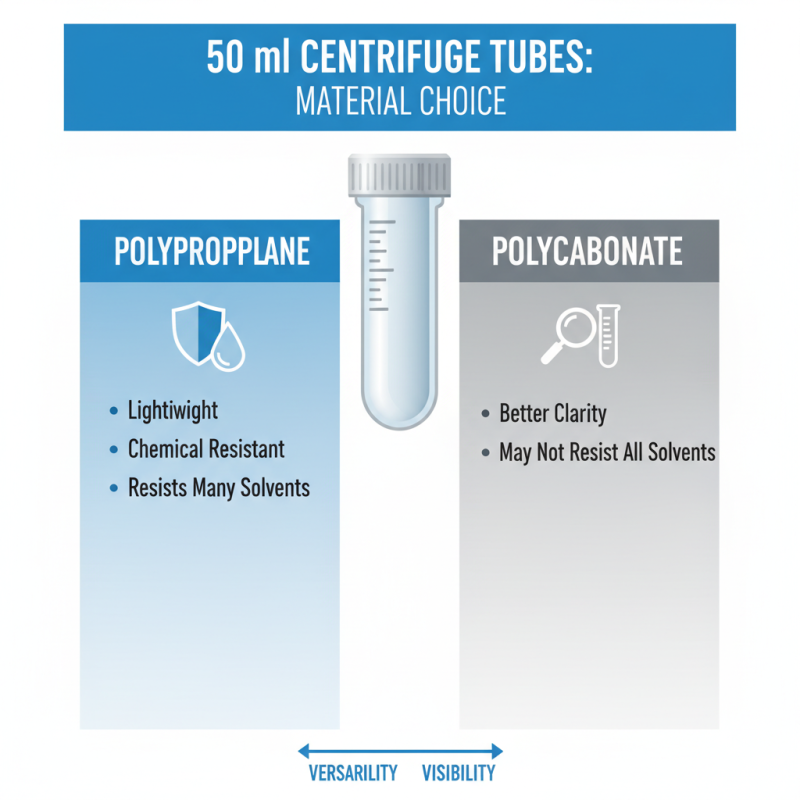
When selecting 50 ml centrifuge tubes, the choice of material is crucial. Common options include polypropylene and polycarbonate. Each material has distinct properties that affect performance. Polypropylene is lightweight and resistant to chemicals. It withstands many solvents, making it versatile in labs. Polycarbonate, on the other hand, offers better clarity but may not resist all solvents.
For daily use, you might prefer polypropylene for its durability. Polycarbonate tubes have their place in visual applications. They provide better clarity for samples but come with limitations. Consider your specific needs when choosing between them.
Tips: Always remember to check the temperature limits for each tube type. This can save your samples from degradation. It’s also wise to test a small batch before scaling up to ensure compatibility. Keeping track of your usage may reveal insights into what works best for your lab. Don't hesitate to rethink your choices as new materials become available.
Best Practices for Using and Maintaining 50 ml Centrifuge Tubes in Labs
Maintaining 50 ml centrifuge tubes requires attention to detail. Regular inspections are crucial to avoid contamination. Studies show that even minor impurities can compromise results. Ensure tubes are clean and sterile before use. Rinsing with distilled water can help.
Proper storage conditions are essential. Tubes should be kept upright in a cool, dry place. An article from the Journal of Laboratory Technology noted that exposure to extreme temperatures can warp plastic tubes. This can lead to compromised integrity during centrifugation.
After each use, inspect for any visible cracks or defects. Discard any damaged tubes immediately. It’s important to follow waste disposal protocols as well. Neglecting this can lead to hazardous exposure for staff. Always document your observations to track any recurring issues. Regular training on these practices enhances the overall laboratory safety culture.